
Your sump pump might not get much attention, but when heavy rain hits, you definitely want it working properly!
Over time, dirt, debris, and sediment can build up inside the pump and sump pit, potentially causing clogs or preventing the system from working properly.
Fortunately, a little routine maintenance can go a long way. I'll walk you through how to clean your sump pump, what to look out for, and how to keep it ready for the next downpour.
Page Contents (Click Icon To Open/Close)
How Often Should You Clean Your Sump Pump?
I'd recommend cleaning your sump pump at least once a year, ideally before the rainy season when you'll need it most.
It's also worth checking it every few months, especially after heavy rain. Remove any debris from the sump pit, check that the intake screen is clear, and make sure the pump is working properly.

How To Clean A Sump Pump (Best Way For Different Parts Explained)
Things Required
Before we discuss how to clean and maintain a sump pump; here are the materials and items necessary to clean your sump pump:
Step By Step Instructions for cleaning your sump pump
Before starting the cleaning process, ensure you take safety precautions. Always turn off the power on the circuit breaker or unplug your sump pump.
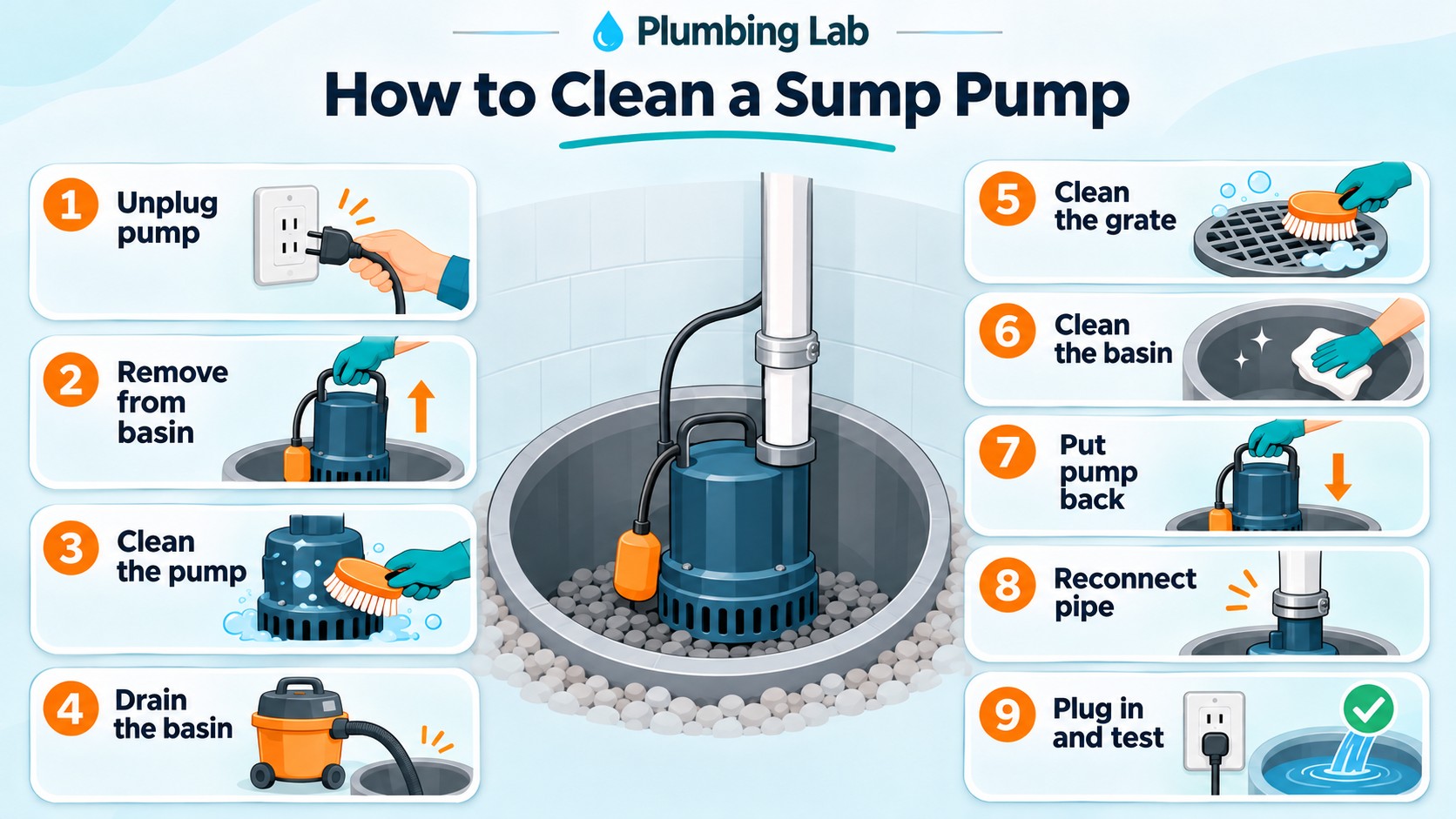
- 1Disconnect And Unplug The Sump Pump
Disconnect and unplug the sump pump from the discharge pipe. Most pumps are joined to the discharge pipe via a rubber sleeve. Employ a screwdriver to loosen it and then pull it off. - 2Remove Pump From Basin
Once disconnected and unplugged, remove your pump from the basin. To drain it completely, hold it above the basin. If you are worried that this will make a mess, put your pump inside a bucket so it doesn't drip on the floor. - 3Clean The Pump
Use a clean rag to clean the pump's exterior. Scrape away all the grime with a scraper or a scrub brush. You also have the option to take it outside and rinse the pump off with a garden hose. - 4Drain The Sump Basin
Use a dry-wet vacuum or a bucket to empty your sump basin. Furthermore, remove any stones, dirt, or gravel from the bottom of the well. If not removed, they can clog your pump and increase the chances of your pump not working when you need it the most. - 5Remove And Clean The Grate
If your sump pump is on a grate, remove it and clean the grate as well. You can spray it with a garden hose or wipe it down via a clean rag. - 6Clean The Sump Pump Basin
Clean your sump basin walls via a clean rag to remove grime and dirt. While it might never be spot-free, ensure that all the drain holes are clear. When you clean your sump pump basin, it will also help you get rid of any foul odors. - 7Put Sump Pump Back
Now that your sump pump is clean, you can replace it. If your pump was on top of a grate, put it back also. Ensure that the pump is in the correct position and level so it works. Furthermore, the float arm must not touch basin walls and move freely. - 8Reconnect Discharge Pipe
Reconnect your pump to the discharge pipe and ensure that your sleeve is appropriately tightened. Even though you must avoid over-tightening the clamp, ensure that it will not leak when the pump starts to run. - 9Plug-In And Test Pump
Plug your pump back in, fill the basin with water until your pump switches on. Then, observe the pump run to ensure there is no problem. Also, note the date you cleaned your sump pump and keep it within reach for your reference. You will also want to add it to your home maintenance list.
How To Clear A Sump Pump Blockage?
When your sump pump fails to remove water effectively, either the sump pump inlet or outlet pipe is clogged.
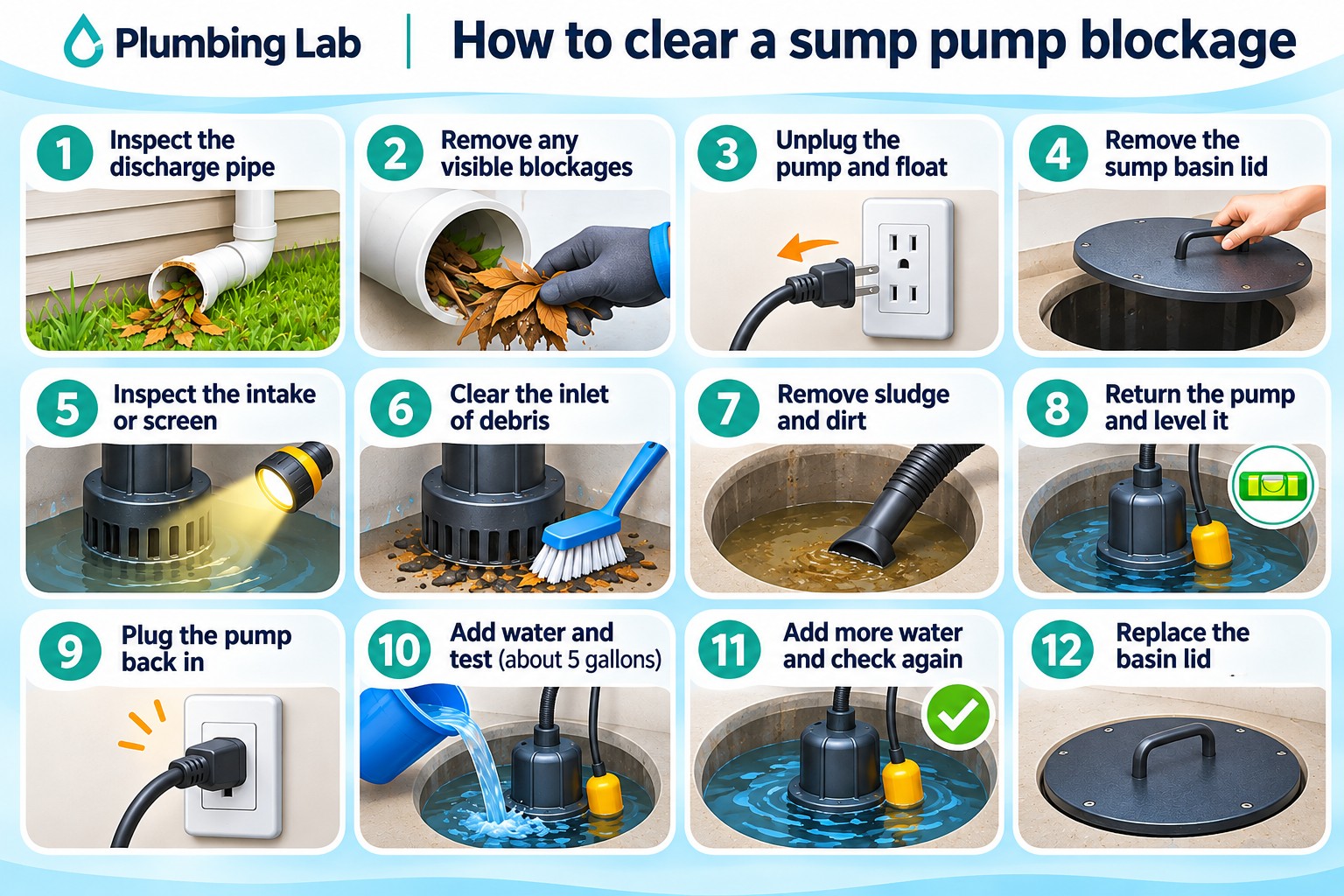
Here are steps on how to clear a sump pump blockage:
- 1Inspect the discharge pipe outlet. Based on the position in the landscape, it can quite easily be clogged by dirt, debris, a tennis ball, or any other object
- 2If there is something plugged at the end of a hose or discharge pipe, remove it
- 3Unplug your sump pump and the float from the electric outlet
- 4Remove the sump basin lid
- 5List aInspect the small opening or screen when water enters your pump. Use a flashlight or headlamp to examine the pump when it is still in the basin. If you cannot see the pump intake clearly, lift it out of the pit, set it on a tarp or the bucket if your flooring material is water sensitive. Element
- 6Clear the inlet of any debris
- 7Scoop as much silt or debris out of the sump basin as you can. Wipe any residue or dirt clinging to sump basin walls
- 8Place the sump pump back inside the basin and ensure that it is level
- 9Plug the sump pump back inside
- 10Pour around five gallons of water into your sump basin to check the pump. Observe float, trigger the on/off, and ensure water efficiently exits the basin.
- 11Pour another five gallons of water into the basin and once again monitor your pump's actions. If your system effectively pumps the water out of the sump basin, then the clog has been cleared
- 12Replace the lid of your sump basin
FAQs
Can you clean the sump pump pit with bleach?
Yes, you can. Bleach is one of the most popular ways to clean and disinfect your sump pump.
And the best thing is that you do not need a lot of bleach for effective cleaning. Instead, just add a few cups of bleach with hot water and get scrubbing.
Can I pour vinegar into my sump pump?
Yes, cleaning your sump pump with vinegar is an easy and quick way to clear the system and prevent clogs. It is also the best emergency cleaner since vinegar is present in every household.
How do you remove calcium deposits from a sump pump?
The best way to do it is to remove the affected fixtures and submerge them in a bucket of vinegar. Leave them for over an hour, take them out, scrub them, and the limescale will fall right off.
What happens if I fail to clean my sump pump?
If you fail to clean your sump pump on time and leave it as it is, it can lead to flooding in your basement.
The flooding will weaken your home's foundation and increase the risk of it crumbling to the ground.
How much does it cost to clean a sump pump professionally?
The average cost of cleaning a sump pump is around $200 to $250 professionally. However, it also depends on the extent of the cleaning and the period between your last maintenance.
Conclusion
A regularly maintained sump pump will last for years and will also prevent your house and basement from flooding. That is why you should ensure that your sump pump is maintained promptly and regularly cleaned.

Ian Haynes is an expert writer who has successfully deployed over 500 plumbing pages and other related content. He has an excellent understanding of home plumbing issues and translates his experiences via Plumbing Lab so readers can have a better understanding of common household problems. Outside of his work, Ian likes exploring Brooklyn with his Labrador.